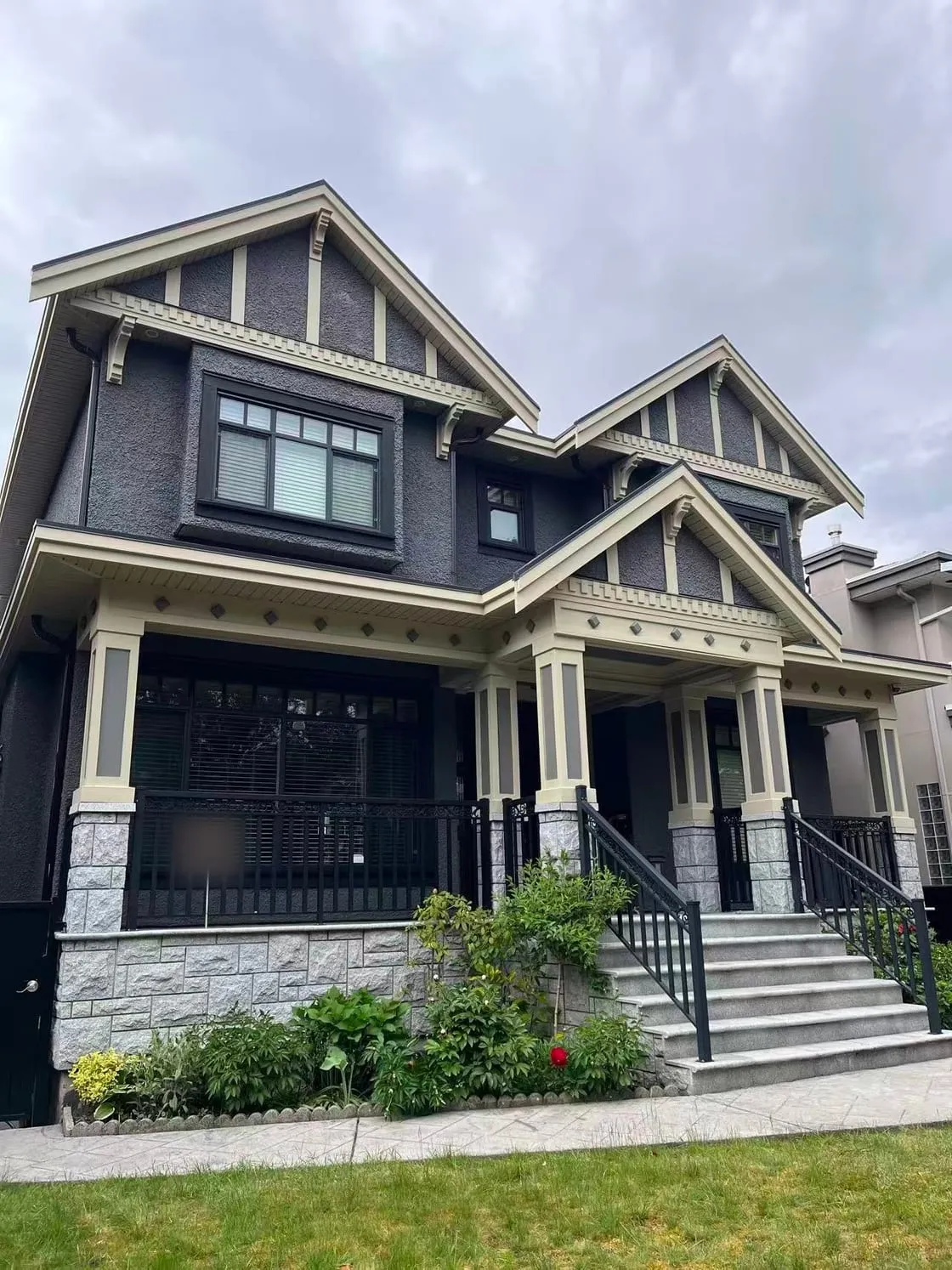
Residential exteriors
Refresh the exterior by understanding each elevation.
Residential exterior painting involves colour and architectural details as well as existing conditions and preparation. Mayda begins with the elevations, trim, windows and doors, and the specific areas that need attention.
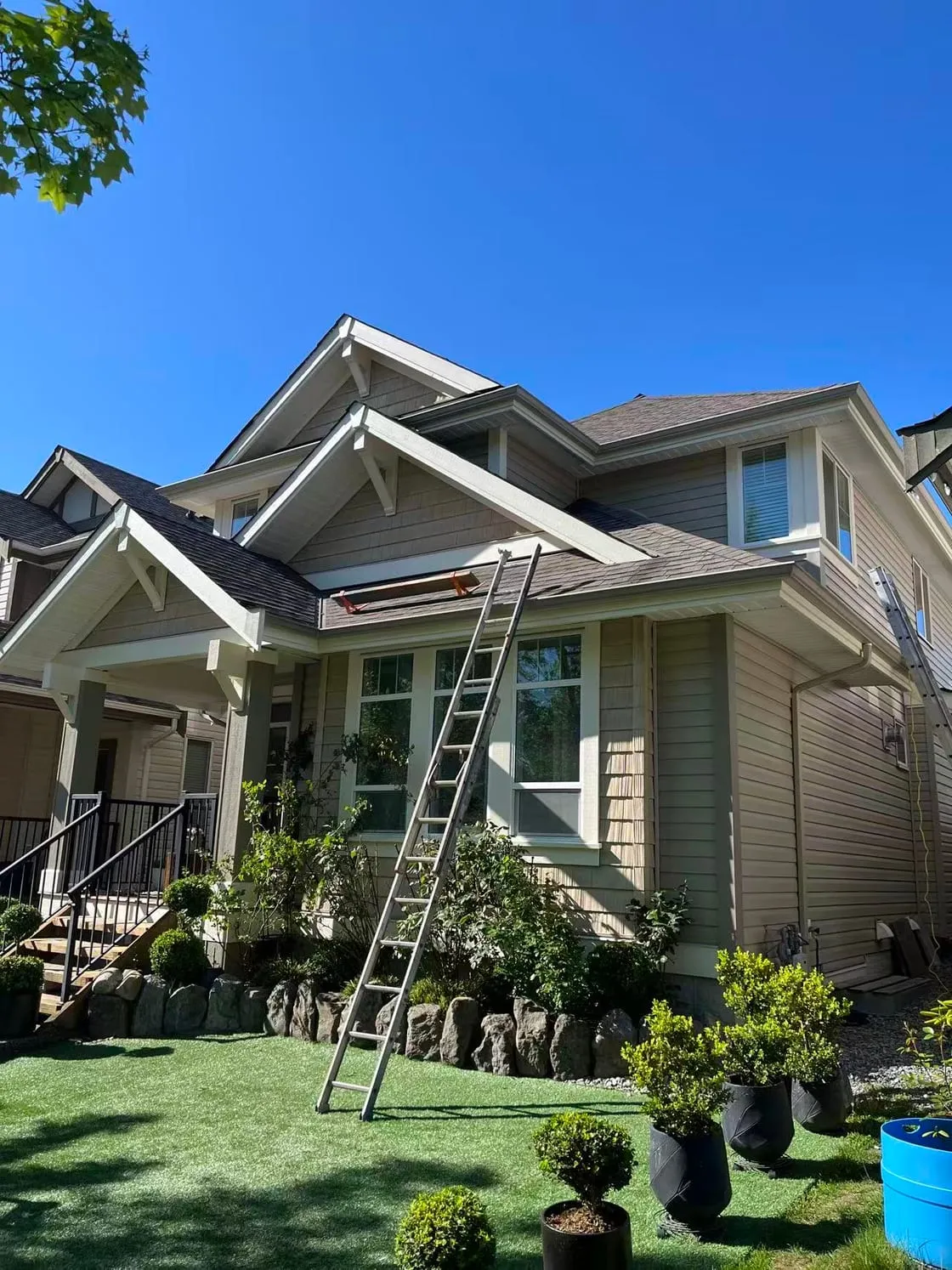
What we discuss and quote
Every elevation, looked at first.
Exterior work starts with the condition of the building. These are the items we walk around with you before the estimate.
- ElevationsWhich sides, which heights, and what stays untouched
- Siding, stucco or shingleMaterial, previous coatings and repairs needed
- Trim, windows and doorsColour relationship and sheen by surface
- Peeling and damageWhere it is, why it happened, what to do first
- Access and maskingPlanting, decks, neighbours and ladders or lifts
- Weather windowTemperature, rain and drying confirmed per product
Consider the material and its condition
Provide photographs of each elevation and note peeling, cracks, earlier repairs, contamination or persistent dampness. Timber, stucco and brick call for different assessments; similar appearance does not establish that the same method is suitable.
Define preparation separately from application
Clarify cleaning, local existing-coating treatment, repairs, primer, finish coats and protection of surrounding areas. If damage or continuing moisture is involved, identify the relevant work first. Repainting is not a substitute for resolving every underlying issue.
View colour as part of the building
Compare walls and trim with roofing, windows, steps and planting. Retaining visible timber, defining an entrance or reducing colour divisions can provide a direction. Confirm the actual product, sample and method separately.
Plan weather and access together
Explain entrances, vehicles, neighbouring structures, planting and site restrictions. The work window must meet the surface and product requirements, not simply a calendar month or a rain-free moment.
Common questions
Can you discuss one elevation only? Yes, with the scope and relationship to other surfaces assessed. Will painting fix every crack or leak? Surface work and repairs to underlying causes must be distinguished, with responsibilities and boundaries made clear.
How Mayda does this
Not every surface outside needs the same product, and putting the most expensive paint everywhere adds a lot to a quote without adding much life.
Walls take a mid-to-high grade paint — the upper half of the range. What matters most there is resistance to UV and sun, with enough water resistance behind it.
Trim takes the best available. Eaves, window frames and doors are fully exposed and take the worst of the sun and the rain. Top-grade paint on those parts buys real years.
Walls see far less driven rain than the eaves do, which is why grading the products this way is sound practice rather than a compromise.
A repaint keeps a house looking right for three to five years. That suits regular upkeep, and it suits getting a house ready to sell — in Vancouver a lot of houses change hands on about that cycle.
Keep exploring