Commercial interiors
Commercial interior painting planned around the space.
Refreshing an office or business interior involves more than changing the wall colour. Mayda discusses the areas customers see, the spaces staff use, and the surfaces to paint or retain.
Scope by area
Define the work by how the space is used.
Walls, ceilings, doors and trim are listed by area so that staff, customers and the site contact know what happens where.
- Reception and customer areasThe first impression; brand colours and high-contact surfaces
- Offices and meeting roomsOccupied or cleared, and in what order
- Corridors and routesAccess that has to stay open
- Back of houseStorage, service rooms and utility areas
- Protected itemsEquipment, signage, glazing and fixed facilities
- Handover recordProduct, colour and sheen for future care
Working around your hours
Three things we confirm before any date.
Zoning, particular hours and documentation are confirmed for each project. Uninterrupted operations should not be assumed.
Areas that stay in use
Which rooms, routes and customer areas must remain usable while work is under way.
Times work cannot happen
Opening hours, deliveries, meetings or quiet periods that rule out certain slots.
Site contact and documents
Who coordinates access on site, and any property, tender or insurance paperwork to check early.
Define the scope by function
List walls, ceilings, doors and trim in reception, offices, meeting rooms, routes and other agreed areas. Clarify whether equipment, signage, glazing and fixed facilities need protection or handling by other people before work begins.
Explain appearance and maintenance together
Provide existing brand specifications or colour references and review physical samples under the actual light beside adjoining materials. Explain contact and cleaning requirements before assessing a suitable product. A colour name does not define performance.
Raise occupancy constraints early
Identify areas that must remain usable, prohibited working times and responsibility for staff or customer access. Zoning or particular hours need project-specific confirmation; uninterrupted operations should not be assumed.
Make handover useful for future care
Check the agreed areas, record product, colour and sheen information, and note follow-up items. Readiness for washing, abrasion or reinstalling objects depends on the actual product and conditions.
Commercial work Mayda has done
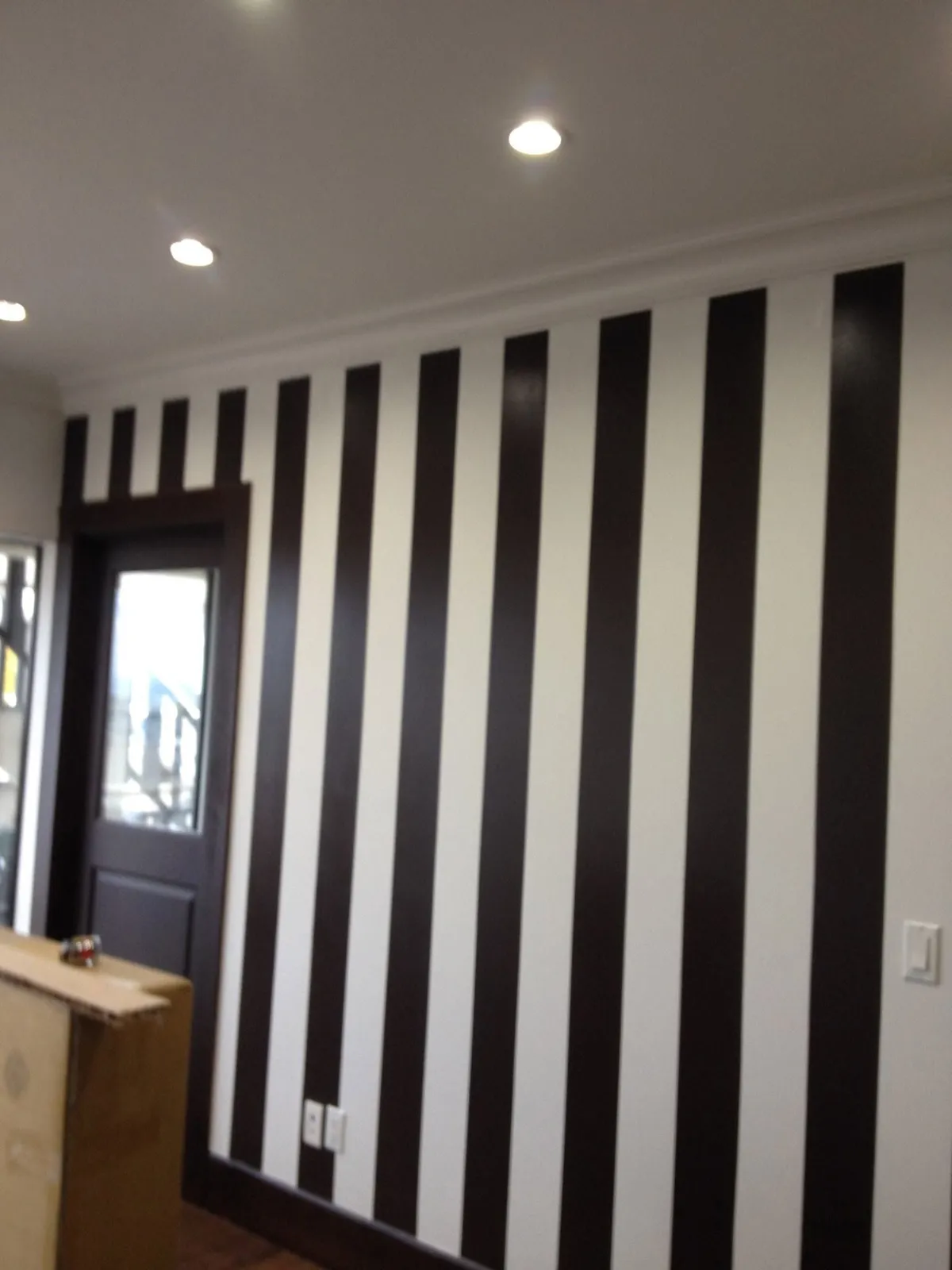
A feature wall is laid out, not improvised. In a heritage house near West 8th Avenue and Oak Street that is used as an office, one wall was painted in stripes. Work like that is set out and masked by hand; the finish depends on the layout and the masking, not on the paint.
Interior paint is zero-VOC where it can be. Mayda uses mid-to-high grade, environmentally sound products and chooses zero-VOC wherever the product range allows — it matters to the crew, who spend the day in the space, and to a business that has to keep operating while the work goes on.
Painted surfaces are easier to keep. A painted wall takes a wipe better than bare or stained wood, and a scuff can be touched up later in the same colour — which is not true of a wood finish, where the colour is very hard to match back.
Prepare the enquiry
Share the city, premises type, occupancy, main surfaces, photographs and site contact. Mayda's historical Vancouver office photographs can inform a discussion of appearance, while methods and scope for your project require their own confirmation.
Prepare your enquiry
Six details that make the first call useful.
You do not need drawings or measurements to start. These six points let us ask the right questions back.
Discuss a commercial project- 01City and premises type
- 02Occupied or cleared during work
- 03Main surfaces and areas
- 04Photographs of the space
- 05Site contact
- 06Timing or documentation needs
Keep exploring