
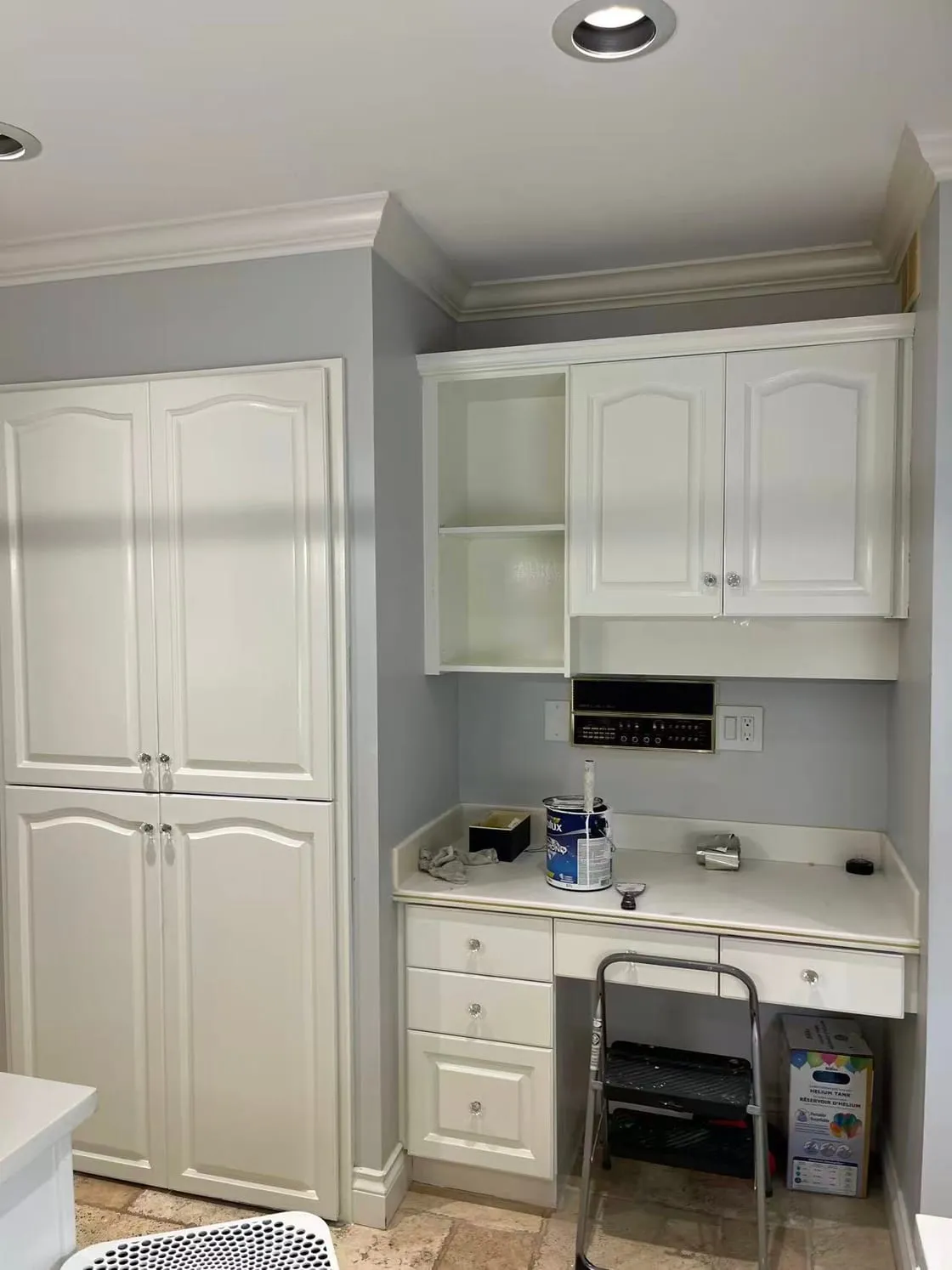
When you still live in the home, the best painting plan answers more than how many days the crew needs. It should explain which rooms are available, what has to move and how everyday routines will work while preparation and coating take place.
Draw a simple room sequence
Mark the bedrooms, bathroom, kitchen and main route through the house. Identify the room that is hardest to take out of use. Then discuss whether the work should progress room by room, floor by floor or through a different agreed sequence.
For example, a family may need one bedroom kept available while another is worked on. That is a question to plan around, not an assurance that staying in the property will be suitable for every job. Include product precautions, ventilation and household needs in the decision.
Specify the surfaces, not just the room names
A bedroom can include walls, ceiling, door, trim and repairs. Put those items in the scope separately. Confirm who moves heavy furniture, takes down wall items and manages anything that needs a qualified trade. Keep personal belongings and confidential work materials away from the agreed work zone.
Before preparation in an older home, discuss whether materials need assessment. Health Canada’s healthy-home guide advises checking suspect lead paint and asbestos before disturbing relevant older materials. Age or a photograph alone is not a laboratory result.
Give access and ventilation their own place in the plan
Keep entry, stairs and required exits in the discussion. Establish how residents and pets will stay clear of the work zone and where materials will be kept. Confirm the arrangements each time the work moves to a different room.
Product instructions govern application and use precautions. For help asking the right questions about low-odour claims, see our indoor paint article. Do not use a low-odour label as an automatic reason to occupy a room during painting.
Separate dry, ready for another coat and fully cured
Benjamin Moore’s care guidance distinguishes dry paint from fully cured paint. Ask for the relevant product’s instructions before washing a new finish or returning it to normal wear. Do not apply one generic interval to walls, doors and cabinets.
Make the handover practical: note when the final coat was applied and what the selected product says about cleaning, handling and normal use. Ask how minor marks should be reported rather than immediately scrubbing them away.
Finish with a useful record
Can we do just a few rooms? Discuss the scope and access with the estimator; make the boundaries explicit.
Who puts everything back? Record responsibility for each item before work begins.
Keep the product, colour code, sheen and surface together with the agreed room sequence and care instructions. For interior painting, tell Mayda your city, rooms and occupancy needs when arranging a free estimate.
Sources and further reading
- Health Canada · Healthy home guide
- Benjamin Moore · Clean and maintain freshly painted walls and cabinets
Sources checked on 14 October 2026. Product pages explain the guidance; they do not imply a manufacturer partnership or endorsement of Mayda.