
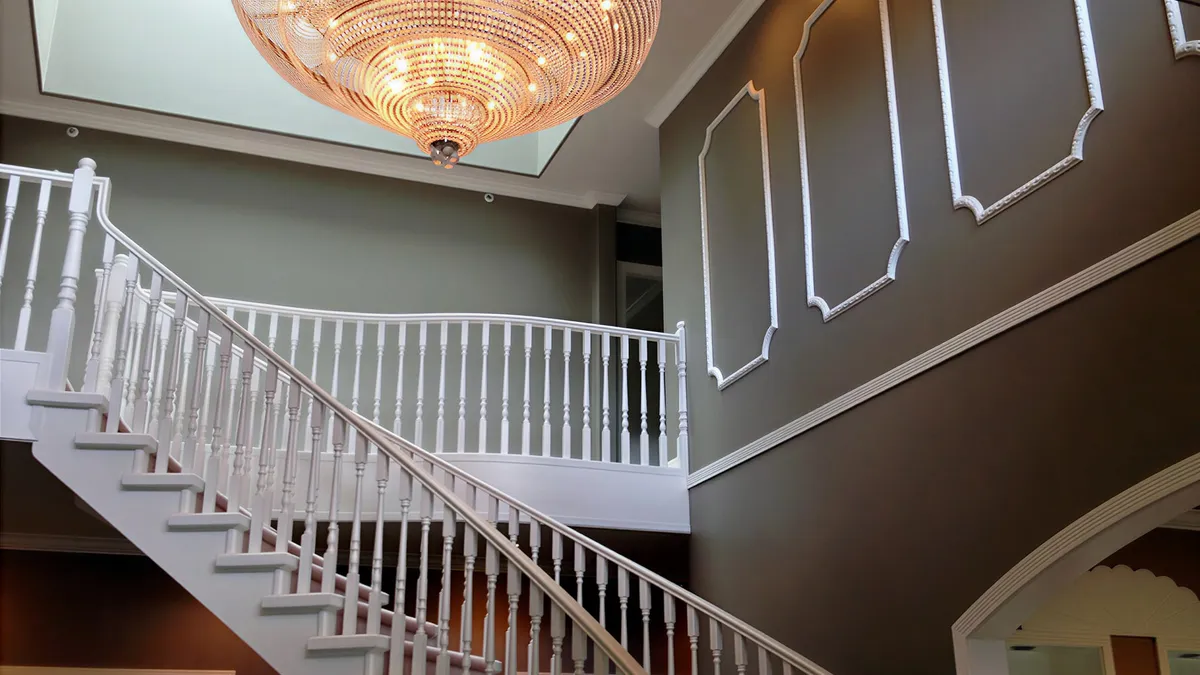
You notice a mark on the stair wall on your way out, just where a backpack brushes the turn. You touch the handrail and see that the section over the first step has gone shiny with use. It makes sense to refresh both in one visit, but it helps to make your choices at three different heights. The wall, the wood you touch and the steps you walk on have different jobs.
Walk the stairs at the hour you use them most
Look from the front door towards the landing. If you normally come home after dark, switch on the actual stair lights and see where the old walls look dim. In Greater Vancouver, a late return in winter may mean you see this part of the home almost entirely under lamps. Think about what you want to notice first, such as a crisp white rail or the warmth of the original wood. A soft wall colour that works with the living room might need a second look at the darker landing.
Now look close to the wall. Low daylight coming in from a side window can expose patch edges, roller texture and dents. A glossy sample may make these more visible. Place a washable matte and an eggshell sample side by side in that light, then look again from the doorway. Read the manufacturer’s cleaning directions for the actual products. Finish names tell you about appearance, and the technical information tells you how the product can be cared for.
Choose the wall colour and woodwork finish together
The hall often connects two or three rooms people have painted at different times. Start at the room you are happiest with. Try a wall sample where that room meets the hall, then move the same board up the stairs. A muted warm off-white often sits quietly beside oak. A quieter grey-green can give painted panelling some definition, and a creamy trim can work with the warmth of older boards. Try these with the shades and bulbs you intend to keep. Our sheen guide explains how to compare the different finishes.
On a painted handrail or door casing, ask about a compatible trim enamel and compare satin with a higher sheen. If you want to keep visible grain on the handrail, start by finding out what finish is already there and whether a compatible clear system can be used. Scuffs on a painted baseboard, wear through to bare wood and a loose rail are separate findings. Include any repairs in the discussion before picking the product.
Treads need their own decision. If you want to paint a surface people step on, use a system specified for floors and suitable for that stair material. Ask about the finished surface, traction and manufacturer’s curing instructions. Keep useful contrast at the stair edges so the steps remain easy to read. Ask how everyone will get between levels while the work is underway. If this is your only stair, discuss timing and access before committing.
Talk through the preparations and the route past the work
Show the painter where kids hang bags or where a pet needs to pass. Decide which hooks, pictures and small furniture you can move. Walk through how flooring and railings will be protected and which handrail or stair surfaces will remain available between stages. A spare bedroom can be closed while it dries. A main stair needs a plan that suits the household and the chosen product.
If the job includes walls with a lot of old marks, put a small representative test near the old patch or the rail. See how the repair and finish look with the light from both levels. Once you have settled on a plan, save the product, finish and colour by surface, along with the manufacturer’s cleaning guidance. That small record can make the next repair easier.
Mayda provides interior painting across Greater Vancouver. For a free on-site estimate, send a pair of photos from the top and bottom of the stairs and tell us which route you need to keep available. We can look at what is wearing, what is worth keeping and how to refresh a space you use every day.